Free SoloFree Lesson

As a "free solo" and appetizer, you'll find nine catchy licks and one of the seven solos I played over this beautiful chord progression. Important: This is not "free jazz" 😀
As a "free solo" and appetizer, you'll find nine catchy licks and one of the seven solos I played over this beautiful chord progression. Important: This is not "free jazz" 😀

Here it is: the much-requested and long-awaited "user manual" for the Jazz School 🙂

In this lesson, you'll learn my solo guitar arrangement of the beautiful Jazz waltz "Moon River"!

Nothing is as important as rhythm. You can improvise the most beautiful melodies: If the timing is wrong, everything is wrong. Here you will learn the secrets of rhythmic precision when playing downstrokes and upstrokes.
"Magic Chords" are fantastic sounding chords that are usually very easy to play thanks to the trick of the open strings they contain.

This lesson may be less extensive than the other courses in the Jazz School, but this content is particularly important! Here you will learn the secret of swing in slow and fast tempos.

Less is more! Shell chords are particularly important, because they are no less than the foundation of Jazz guitar. With these chords reduced to three notes, you can easily accompany all Jazz standards!

Everyone plays "Autumn Leaves". And rightly so, because the chord progression is as beautiful as it is omnipresent. We have put together a huge course on "Autumn Leaves" that you can benefit from endlessly!
The chord progression of "Blue Bossa" is very popular, and rightly so. Here you will learn a new, fresh melody, the chord accompaniment in Bossa Nova style, arpeggios and you will be presented with a detailed explanation of a complete solo.
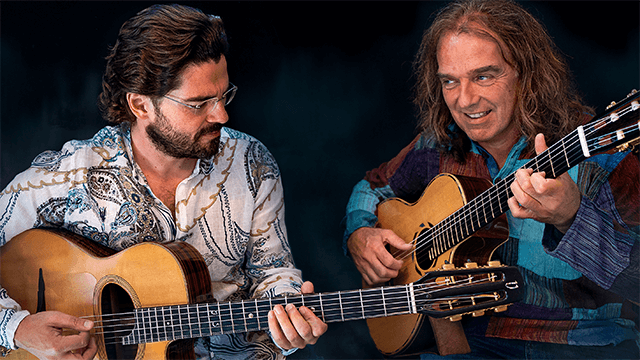
Our first guest teacher at jazz-school.de is Joscho Stephan. Learn the fundamentals of music in the tradition of Django Reinhardt from this giant of Gypsy Swing.

Torsten Goods is a world-renowned guitar virtuoso. He plays in a style similar to George Benson, and he also is a great singer. He gives us an impressive insight into his playing technique.
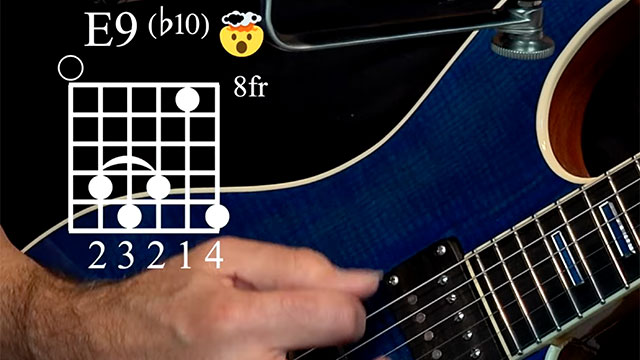
I recommend that you work on this lesson first. Here you will learn how to turn the campfire chords into jazzy chords by adding just one note.

In this lesson, we'll learn the Jazz Blues in the key of Bb. This lesson is technically simple, but very rich in content!

Jazz Blues: Jazz would be much poorer without Jazz Blues. The feeling, the typical harmonies and the swing rhythm are an integral part of the repertoire of almost all jazz musicians. Here you will learn Jazz Blues in the key that Joe Pass preferred.
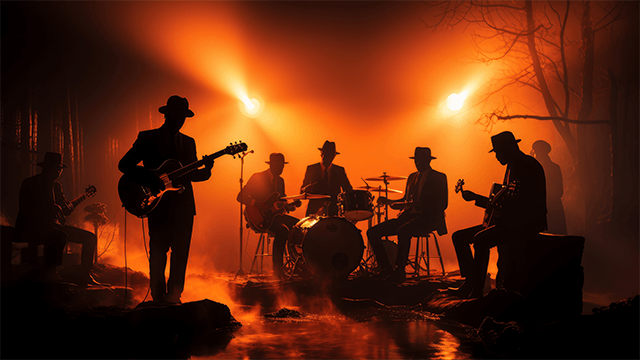
The heart of the Jazz School beats right here, in the Minor Blues! There's a lot to learn: the Blues theme "K.B.", many jazz licks, several accompaniment techniques, and an exciting solo - written out note by note.

I begin each of my solo concerts with my composition "November." Learn this very popular piece; it's worth every effort!
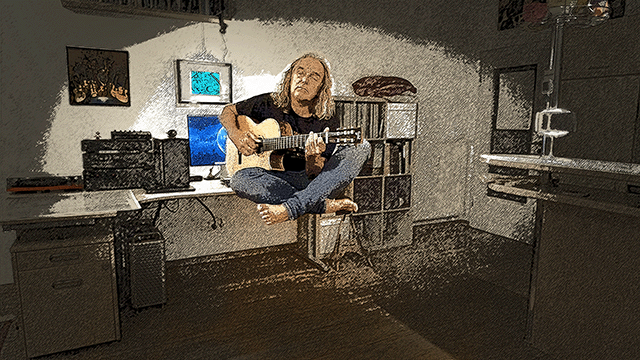
In this lesson, you'll learn things other guitar teachers don't usually talk about. Learn to play with extreme ease and freedom while creating the best possible sound!

No chord sequence is more important than II-V-I. In this very comprehensive course you will learn everything about the most commonly played chord sequence. In addition to the chords, it also covers their arpeggios, example solos and II-V-I licks.

Most Jazz standards have at least one passage with a minor II-V-I chord progression. Reason enough to take a closer look at this beautiful chord progression.
Jazz is about tension and resolution. This tension is often created with the beautiful-sounding altered scale. Here you'll learn everything you need to know about this sound.
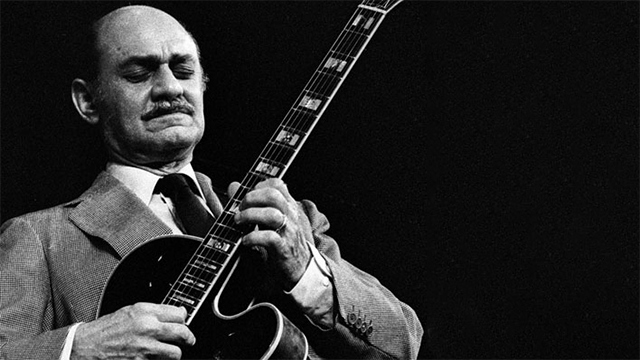
The I-VI-II-V progression, also called turnaround, is almost as important as II-V-I. Both progressions are omnipresent in Jazz. In this lesson I'll show you how jazz legend Joe Pass approached turnarounds.

In this "Blues stop chorus" you will not only learn a very cool rhythm, but also how to create a jazz blues with exactly this rhythm using chords on the high four strings.
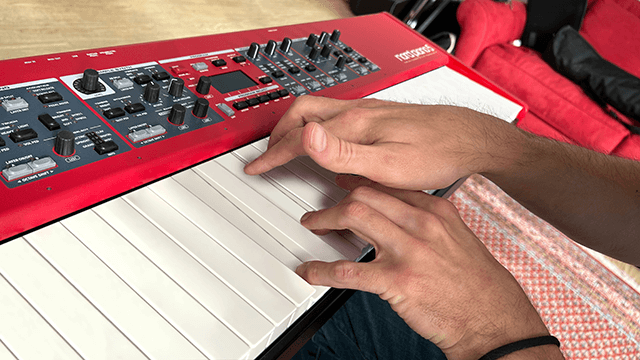
Bored while practicing scales? Not with this course! Learn different patterns and melodic progressions that make practicing scales fun. With instructions for improvisation.
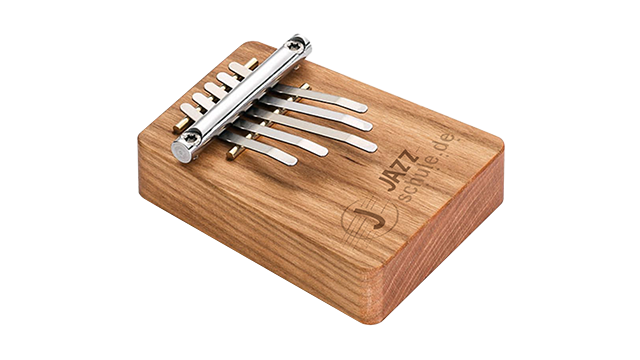
This lesson is as detailed as it is easy! Here you will learn how to deal with the pentatonic scale. It is one of the most important basics of improvisation, nobody can get past it. So: get to work!
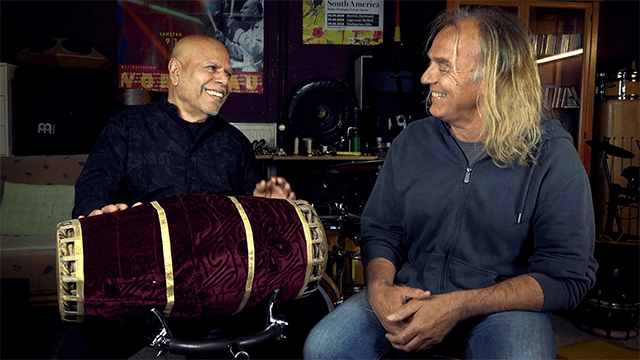
We received a request to change the location of the jazz school for one lesson. Therefore we were in Cologne in the rehearsal room of Indian percussionist Ramesh Shotham, with whom we had the pleasure of filming a guest lesson.

In this lesson, we'll delve deep into the Indian Konnakol language and learn a fantastic rhythmic composition by Ramesh Shotham.
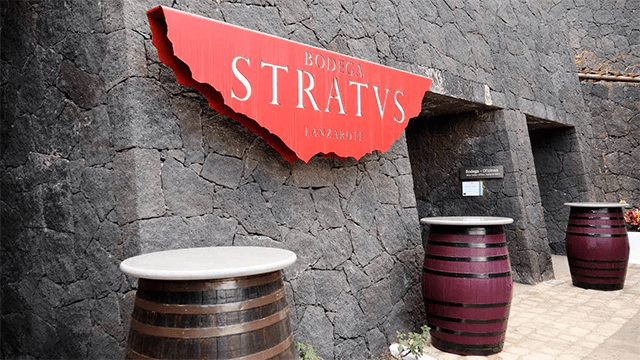
I am very happy to be able to present one of my compositions to you. Stratvs, that I am very proud of, is anything but a beginner's piece, but who is expecting you to be able to play it next week?
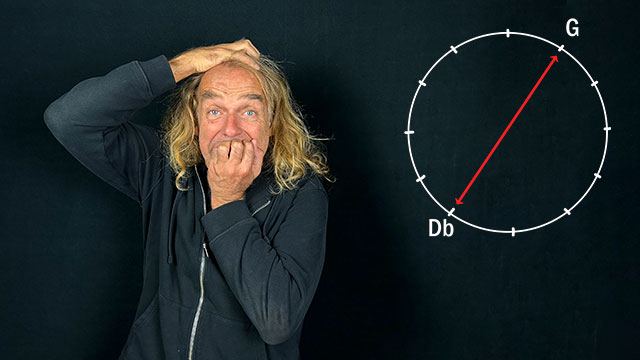
Here, you will learn about one of the most important tools in jazz harmony. The tritone substitution ensures that your chords move with a beautiful voice-leading.

Play like Joe Pass! In this course you will learn how the master approached a well-known jazz standard. This includes the head, the accompaniment in Joe Pass style, a solo and a chord melody version à la Joe Pass.

One of the most beautiful Bossa Nova classics explained for you. Learn this piece in the style of Wave.

No, this course is not too difficult for you, because you can and should take plenty of time for it. You will find: Giant Steps is fun!
A standard Blues on jazz-school.de? In the Clapton Style? Well, I believe it's important to also practice Blues that is no Jazz Blues, because - as we know - almost everything comes from the Blues.
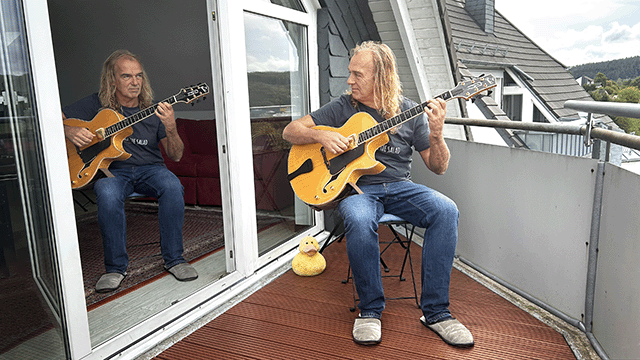
For me, skillful inside-outside playing is much more than just shifting pentatonic scales around. In this course, you'll learn how to consciously move away from a scale to introduce a new sound.

I composed the solo guitar piece "Autumn," which is based on the chord progression of "Autumn Leaves," in '99.
The half-tone-whole-tone scale is a symmetrical scale consisting of eight notes, alternating between half and whole steps. It sounds very exciting and modern.
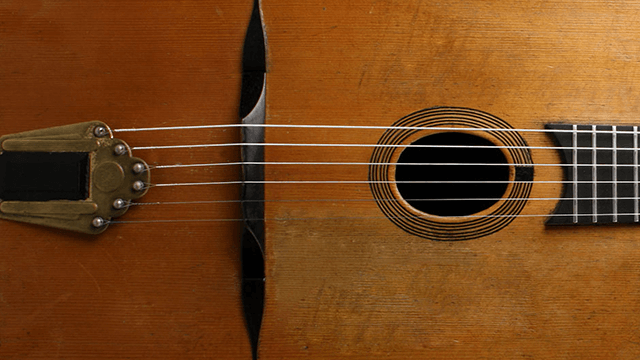
Biréli Lagrène is one of the best guitarists on the planet. He has kindly allowed us to explain his solo on "Fiso Place" in detail here.
It's Christmas time! Even here at our Jazz School. Learn the world's most famous Christmas carol in an arrangement for jazz guitar.
This composition of mine dates back to 2005, and it's quite something! Here you'll learn a beautiful ballad with colorful chord progressions and a catchy melody.

I recommend that you work on this lesson first. Here you will learn how to turn the campfire chords into jazzy chords by adding just one note.
Jazz waltz is the topic of this comprehensive lesson. Here you will learn the famous chord progression of the jazz standard "Bluesette" by Toots Thielemans, exploring various ways to rhythmically interpret the ¾ time signature.
This is one of the largest and most comprehensive lessons in the Jazz School. We cover the topic of solo playing over the chords of the well-known classic "Bluesette" in great detail. Have fun!
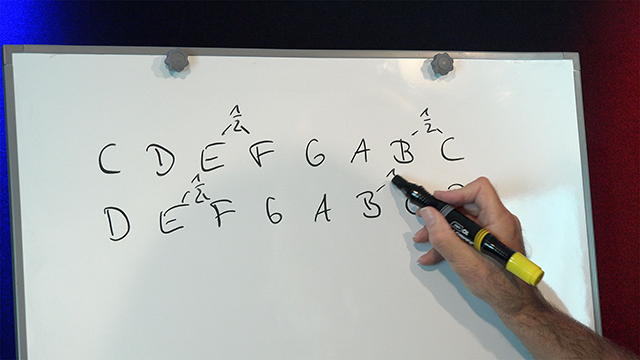
You know me: theory doesn't have to be boring, and it should always have a practical application. Here, I'll explain modal scales (modes) in my own way. Working with the material will also make this lesson a great exercise for your ear training.

"Begin At The End" means, for me, pursuing goals by thinking backwards along the path to them. What was the last necessary step before reaching the goal, what was the penultimate step, and so on.
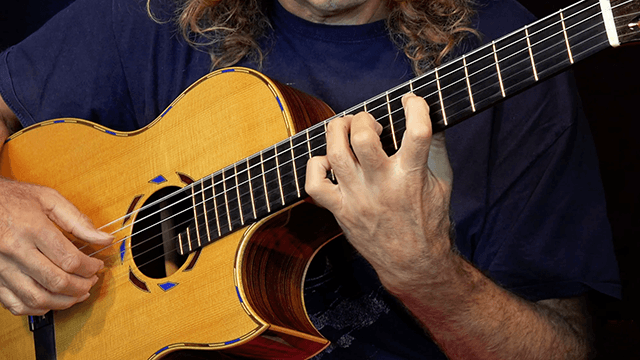
This time, I'd like to introduce you to a piece I've composed that I think you'll enjoy. I wrote "Fairy Tale" back in the 1980s, and it has changed and evolved over time.
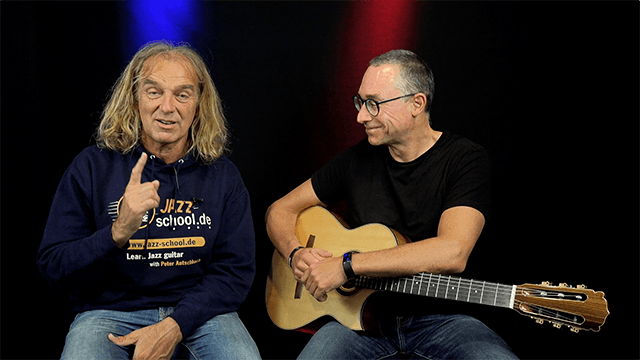
The experienced workshop writer for Akustik Gitarre and Acoustic Player magazines will be delivering the very first guest lesson for the Jazz School. You can look forward to an in-depth treatment with some fantastic-sounding Bossa Nova accompaniment patter
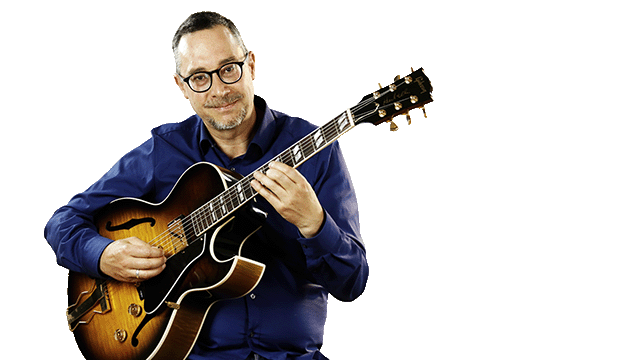
Our guest lecturer, Andreas Schulz, explains a simple yet effective solo over the chords of "How Insensitive" in his second lesson.
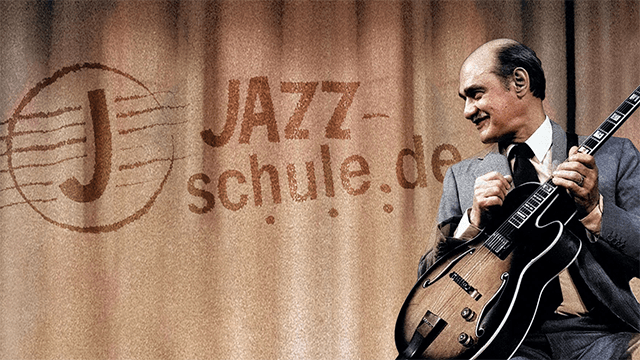
A tribute to Joe Pass: I wrote the piece "Blues for Joe" some time ago in the style of Joe Pass. Learn the whole piece here and follow in the footsteps of the guitarist who inspires me every time I listen to him.
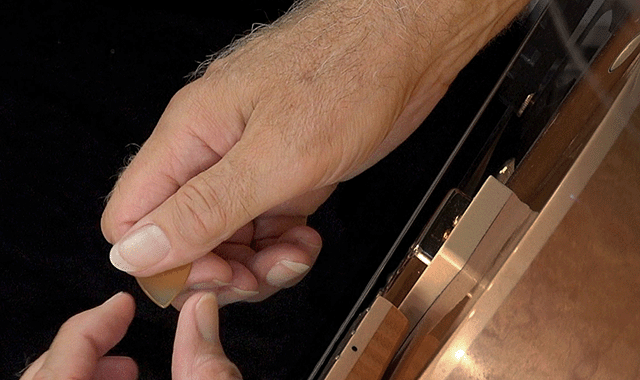
As is so often the case in life, there isn't just one way. Therefore, we don't proclaim any dogmas here, but rather present you with various pick techniques.
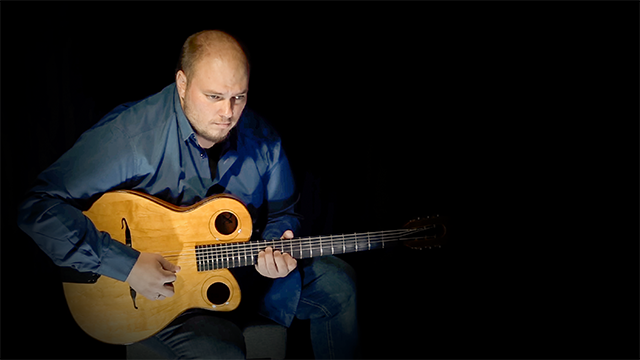
When Al Di Meola calls you a genius, you've reached the Olymp of guitar virtuosity. The Olymp, as everyone knows, is in Greece, and the Greek virtuoso Michael Paouris gives us an exclusive glimpse into his incredible technique.


